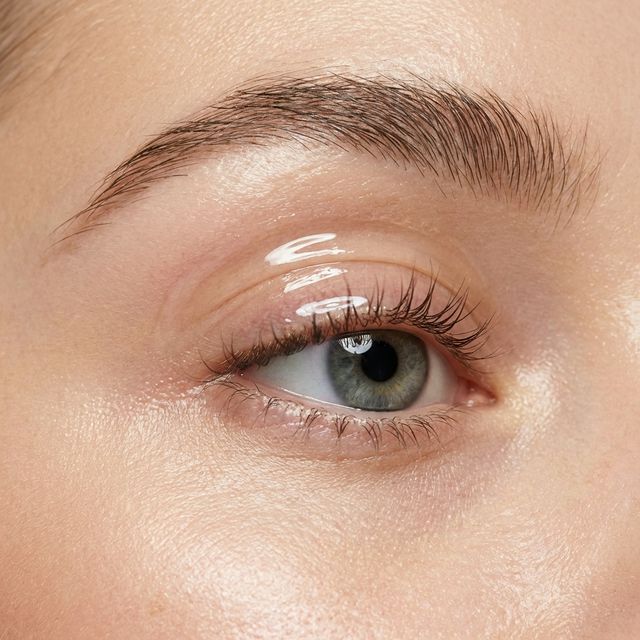
Glitter eyeshadow is gorgeous in the pan and on the beauty influencer’s feed. In real life, it often ends up scattered across your cheekbones, under your eyes, and everywhere except where you put it. That fallout isn’t just annoying — it can irritate your eyes and ruin the rest of your makeup.
This page is the formula ranking: which glitter products stay put, and which listings are liquids, pressed powders, adhesives, or face products wearing an “eye sparkle” title. How to press glitter on without wrecking your base lives on how to apply glitter eyeshadow without fallout. Shine without chunky glitter lives on metallic chrome eyes and cream vs. powder vs. liquid. Those URLs stay live.
Amazon will sell “no fallout glitter” as one module. It will not tell you that a body liner may not be labeled for the eyelid, that pressed Moondust still wants a tacky base, or that a face glow stick is not an eye glitter. The Eyeshadow Looks Beauty Desk compared current listings and published formula notes. The desk does not run an in-house wear lab or a test fleet.
Who this ranking is for. People who want sparkle that survives a night out and are willing to match formula type before brand. Contact-lens wearers who need locked-in particles, not craft glitter.
When to skip this ranking. If your nude weekday palette is the actual gap, use the nude ranking or the price-tier stack. If technique (press vs swipe, eyes first) is the failure, use the application tutorial before you buy another pot. If lids are reactive, skip loose glitter entirely and start with hypoallergenic eyeshadow. If you already own a liquid glitter and just need a Tuesday look, go to everyday eye looks.
Lid-type notes. Oily lids: liquids that self-set usually beat dry pressed glitter; oil still breaks a weak glue. Hooded lids: keep sparkle on the visible mobile lid — glitter in the fold reads as fallout even when the particles have not dropped. Contacts: prefer micro-glitter locked in a liquid or cream; see eye makeup for contact lens wearers.
What Makes Glitter Fall Out (and What Prevents It)
Glitter fallout comes down to three factors:
1. Particle size. Larger glitter particles are heavier and harder to keep in place. Finer micro-glitter and micro-shimmer particles adhere better and shed less. Look for descriptions like “micro-glitter,” “metallic,” or “foiled” rather than “chunky glitter” or “loose glitter.”
2. Base formula. The medium the glitter sits in determines how well it grips the skin. Cream and gel bases hold glitter far better than dry pressed formulas. Liquid eyeshadows with glitter suspended in them tend to be the most fallout-resistant because the glitter is locked into the product as it dries.
3. Application method. Even the best formula will shed if you brush it on with sweeping motions. Pressing and patting are the only appropriate motions for glitter. That method page is the technique sibling.
4. Label job. A listing can be a self-setting eye liquid, a pressed powder that still needs glitter glue, a glitter primer, or a body/face product. Those are four different buys. Mixing them up is how you get fallout and, worse, product in the eye that was never labeled for the lid.
Best Glitter Eyeshadows: Ranked by Formula Honesty
Best Overall: Stila Glitter & Glow Liquid Eye Shadow
Stila Glitter & Glow Liquid Eye Shadow (~$24) is the self-setting liquid that published notes still treat as the no-fallout default. Pearl and glitter particles sit in a lightweight base that dries down and flexes with the lid.
Why the formula job fits: Once dry, the glitter is bound in the film. That is a different mechanism than a dry pressed pan sitting on regular primer. A dedicated eye primer can still extend wear on oily lids; it is not required for the particle lock the liquid is sold on.
Who it is for / skip. For a true lid glitter in one wand. Skip it if you wanted a pressed pan or a liner. Skip shade-only shopping — Kitten Karma (champagne gold) and Smoky Storm (pewter) are different SKUs under the same product name. Confirm the listing is Glitter & Glow liquid eye shadow, not a Stila liner or a Magnificent Metals foil.
Beauty Desk listing check: Match “Glitter & Glow Liquid Eye Shadow” plus the shade name on the bottle. This ASIN should be the liquid, not a kit of face glitters. Prefer new, brand-sold stock.
Best Drugstore: NYX Professional Makeup Liquid Crystal Liner
NYX Liquid Crystal Body Liner (~$7) is a liner, and the listing name says body. People pat it across the lid because the liquid dries down and the price is low. That does not make it an eyeshadow, and it does not make every Crystal listing eye-safe.
Why the formula job is conditional: The liquid base is what limits fallout once dry — same physics as other glitter liquids. The honesty note Amazon will not put on the module: confirm the current package is labeled for use around the eyes. If the carton is body-only, skip it as a lid product. A $7 liner is not a substitute for Stila if you need an eye-labeled liquid.
Who it is for / skip. For graphic sparkle liner or a thin lid wash after you have read the eye-use label. Skip it if you wear contacts or have reactive lids and the listing is ambiguous. Skip face/body glitter gels sold under similar “crystal” names.
Beauty Desk listing check: Read the product type (body liner vs eye liner vs shadow) and the use area on the label. This ASIN should match the Crystal liner named here, not a NYX glitter primer and not a Jumbo pencil. Prefer new, brand-sold stock.
Best Pressed Formula: Urban Decay Moondust Eyeshadow
Urban Decay Moondust (~$22) is one of the few pressed glitter-shimmers that published notes treat as controllable. Micro-fine sparkle sits in a creamy pressed base. It still behaves like a powder: a damp flat brush or a tacky glitter primer is the usual published method, not a swipe with a fluffy blender.
Why the formula job differs from Stila: Pressed glitter can look like a liquid in photos and still shed if you treat it like a matte taupe. If you refuse adhesives, pick a self-setting liquid above instead of this card.
Who it is for / skip. For people who want a pan, not a wand. Skip the Moondust palette if you wanted a single, and skip Naked Ultraviolet if you wanted sparkle rather than violet mattes — that compact lives on the price-tier ranking. Space Cowboy and Solstice are different shades.
Beauty Desk listing check: Confirm a Moondust single (or the named shade) vs a Moondust palette vs a Naked compact. Prefer new, brand-sold stock.
Best Cream Formula: NUDESTIX Nudies All Over Face Color Glow
NUDESTIX Nudies Glow (~$34) is a cream highlight that people use on lids because the glow particles are milled into the cream, so they move with the skin instead of sitting on top as loose glitter.
Why the formula job is honest: This is a face glow first. Fallout is low because there are no loose chunks — not because it is a dedicated eye glitter. If you need a product labeled only for eyes, skip this card and use Stila or an eye-labeled cream.
Who it is for / skip. For a subtle everyday sheen, not a chunky party lid. Skip it if you wanted true glitter. Skip Nudies blush or matte face sticks sold under similar names.
Beauty Desk listing check: Confirm Nudies Glow (all-over face color), not a matte Nudies or a lip product. Read whether the current label includes eye use. Prefer new, brand-sold stock.
Best Luxury: Pat McGrath Labs EYEdols Eye Shadow
Pat McGrath EYEdols (~$28) in the metallic and shimmer finishes are dense pressed pans that published notes describe as almost wet-look, with very little shed when packed on. That is a luxury single, not a Mothership palette.
Why the formula job fits: A dense, even particle size lies flatter than chunky craft glitter. Matte EYEdols are a different finish and will not give you this effect.
Who it is for / skip. For a special-occasion metallic lid. Skip it if you wanted Mothership V nudes — that palette lives on the nude ranking. Skip matte EYEdols listings. A single that beats filler is the sibling if you are building a custom magnetic palette rather than chasing glitter.
Beauty Desk listing check: Confirm EYEdols plus the shade and finish (metallic/shimmer vs matte). This ASIN should be a single pan, not a Mothership. Prefer new, brand-sold stock.
Formula vs adhesive vs powder — buy the right layer
| What you are actually buying | What it does | When to skip |
|---|---|---|
| Self-setting glitter liquid (Stila) | Particles lock as the film dries | You wanted a refillable pan |
| Pressed glitter-shimmer (Moondust, metallic EYEdols) | Needs press-on application; often wants extra tack | You refuse adhesives and still want chunky glitter |
| Cream face glow (NUDESTIX Glow) | Low shed, low sparkle, may be a face SKU | You need an eye-only label or true glitter |
| Body / crystal liner (NYX Crystal) | Liquid lock if the label allows the lid | The carton is body-only, or you wear contacts and the label is vague |
| Glitter primer / glitter glue | Tacky layer under powder glitter | You already bought a self-setting liquid and do not need a second product |
| Regular eyeshadow primer | Holds mattes and some shimmers | You expected it to hold chunky glitter by itself |
Dedicated adhesives already linked on this site:
- NYX Professional Glitter Primer (~$7) — clear, tacky, sold as a glitter primer, not a shadow
- Too Faced Glitter Glue (~$20) — tackier published use-case for chunkier glitter
Beauty Desk listing check (adhesives): Confirm primer/glue, not a glitter shadow and not a standard Urban Decay Primer Potion. Those are different ASINs and different jobs.
How to Apply Glitter Eyeshadow Without Fallout
Even the best formula benefits from proper technique. The full method is on how to apply glitter eyeshadow without fallout. The short version:
Step 1: Apply a Glitter-Specific Base
Standard eyeshadow primer helps mattes. Heavy glitter wants a dedicated glitter adhesive (above) applied only where you want sparkle, then waited out until tacky, not wet.
Step 2: Press, Don’t Sweep
Load a flat brush or your fingertip. Press straight down. Lift, reposition, press again. Do not drag.
Step 3: Build in Layers
A thin first layer, a short set, then a second press. Two thin layers hold better than one thick dump.
Step 4: Do Eyes First
Apply glitter before foundation and concealer. Catch loose particles on a tissue. Then do the rest of the face.
Step 5: Set and Forget
Once it is on, leave it. Blending over glitter is how you create the fallout you just tried to avoid.
Glitter Eyeshadow Comparison Table
| Product | Price | Formula | Fallout job | Skip if |
|---|---|---|---|---|
| Stila Glitter & Glow | ~$24 | Liquid eye | Self-setting film | You wanted a pressed pan |
| NYX Crystal Liner | ~$7 | Liquid liner (listing says body) | Low if eye-labeled | Body-only carton, contacts + vague label |
| Urban Decay Moondust | ~$22 | Pressed | Low with press + tack | You refuse adhesive and want chunky glitter |
| NUDESTIX Glow | ~$34 | Cream face | None (not true glitter) | You needed an eye-only glitter |
| Pat McGrath EYEdols | ~$28 | Pressed metallic | Almost none when packed | You wanted a Mothership or a matte pan |
When to Skip Glitter
Not every occasion calls for glitter, and not every eye situation handles it well:
- Contact lens wearers — fine micro-shimmer locked in a liquid is the usual published caution; chunky glitter raises the odds of particles under a lens. See eye makeup for contact lens wearers.
- Very sensitive eyes — prefer cream or liquid films where particles are bound. Pressed glitter with loose flash is a higher irritation risk. See hypoallergenic eyeshadow.
- You wanted shine, not sparkle — metallic and foiled formulas are the cream vs. powder vs. liquid conversation, not another glitter glue.
Related reads:
- How to Apply Glitter Eyeshadow Without Fallout
- Best Eyeshadow Palettes (price-tier)
- Best Nude Eyeshadow Palette
- Best Hypoallergenic Eyeshadow for Sensitive Eyes
- Best Single Eyeshadows Worth Buying
- Holiday Party Eye Makeup
- Metallic Chrome Eyes
Sourcing and affiliate disclosure live on the editorial policy and how we make money. The Beauty Desk does not run an in-house lab or a test fleet.
Get weekly eye care & beauty tips
Guides from the Eyeshadow Looks Beauty Desk. No spam, ever.
Frequently Asked Questions
Why does glitter eyeshadow fall out so much?
Traditional glitter shadows use loose particles that sit on top of the skin rather than bonding to it. These particles are held in place by a binder, and cheaper formulas use weaker binders that break down with blinks and facial movement. Better formulas use finer particles with stronger adhesives, or embed glitter into cream and gel bases that grip the skin directly.
Is glitter eyeshadow safe for your eyes?
Cosmetic-grade glitter that meets FDA guidelines is safe for use around the eyes. The concern is with craft glitter, which uses larger, sharper particles that can scratch the cornea. Always check that your glitter shadow is specifically labeled for eye use. Pressed glitter shadows and cream-based formulas are generally safer than loose glitter because the particles are less likely to migrate into the eye.
What is the best way to apply glitter eyeshadow?
Use a flat brush or your fingertip and press (never swipe) the glitter onto the lid over a sticky base like glitter glue or concealer. Apply it only to the areas where you want it, then leave it alone. Do not blend glitter. The pressing motion adheres the particles to the base, while swiping displaces them and causes fallout.
Can you use regular eyeshadow primer for glitter?
Standard eyeshadow primer helps, but a dedicated glitter primer or glitter glue works much better. Products like the NYX Professional Glitter Primer create a tackier surface specifically designed to hold glitter particles. Regular primer is formulated for pressed powder adhesion, not for the heavier particles in glitter shadows.
Related Articles
 tutorials
 How to Apply Glitter Eyeshadow Without Fallout: Techniques That Keep It in Place
Read Guide arrow_right_alt tutorials
 Cream vs. Powder vs. Liquid Eyeshadow: Which Formula is Right for You?
Read Guide arrow_right_alt tutorials
 Metallic and Chrome Eyes: How to Get the Liquid Metal Look
Read Guide arrow_right_alt products
 Best Eyeshadow Palettes: Tested Picks Across Every Price Tier
Read Guide arrow_right_alt products
 Best Nude Eyeshadow Palette for Every Skin Tone
Read Guide arrow_right_alt products