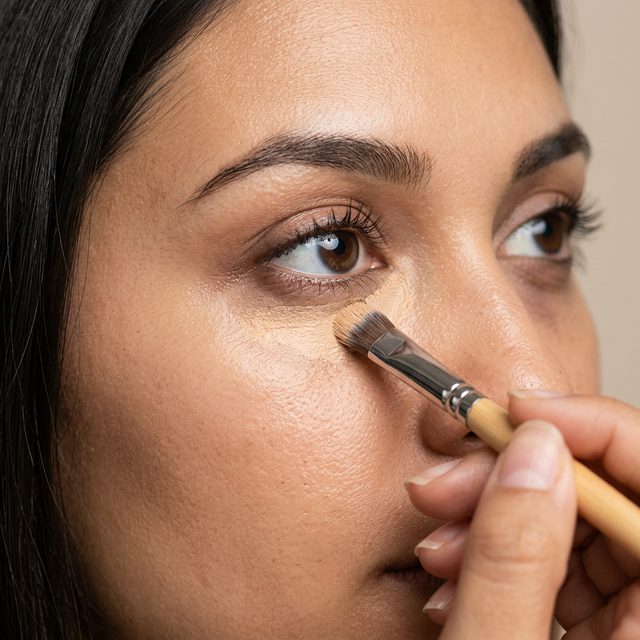
Using a color corrector for dark circles cancels out under-eye shadows by neutralizing discoloration before you apply concealer. To use it, choose a peach, orange, or red shade based on your skin tone, tap it onto the darkest areas, and set it with a light translucent powder.
Executive Summary
- Color Wheel Rules: Opposite colors cancel each other out. Orange and peach neutralize blue and purple dark circles.
- Shade Selection: Choose peach for fair-to-medium skin, orange for tan-to-deep skin, and red-orange for very dark skin tones.
- Application Order: Always apply skincare first, follow with the color corrector, layer concealer on top, and finish with setting powder.
- Thin Layers: Use a tiny amount of corrector to prevent heavy makeup buildup and creasing under the eyes.
- Tap, Don’t Swipe: Press products into the skin using your fingers or a sponge to keep the corrector in place.
What is Color Correction and How Does It Help Dark Circles?
Color correction is a makeup technique that uses contrasting colors to hide skin discoloration. Instead of piling on heavy flesh-toned concealer to cover dark circles, you use a colored cream to cancel out the dark undertones. This method allows you to use less makeup overall, giving a more natural and lightweight finish.
Dark circles are rarely just dark; they contain undertones of blue, purple, green, or brown. Standard concealers are often too translucent or too yellow to hide these cool undertones. When you put regular concealer directly over dark circles, the cool shadow often bleeds through, making the under-eye area look gray or muddy.
Using a color corrector fixes this issue by shifting the color value of the shadow back to neutral. Once neutralized, a light layer of concealer is all you need to make your skin look bright and even. This is particularly helpful for those dealing with deep discoloration, as it avoids the cakey look that comes from heavy concealer.
How Does Color Wheel Theory Apply to Under-Eye Correction?
The secret to color correction lies in basic art theory. The color wheel shows how different colors interact with each other. Colors that sit directly opposite one another on the color wheel cancel each other out when mixed.
Under-eye circles are typically cool-toned. Depending on your genetics and skin thickness, they may look blue, purple, or brown.
- Blue shadows: Orange sits opposite blue on the color wheel. Therefore, orange pigments cancel out blue shadows.
- Purple shadows: Yellow-orange or peach sits opposite purple. These warm shades neutralize purple undertones.
- Brownish-green shadows: Red or pink tones help neutralize brown or green-tinted discoloration.
By identifying the exact undertone of your dark circles, you can choose the correct opposite color to neutralize the shadow completely.
Peach vs. Orange vs. Red: Which Corrector Shade Fits Your Skin Tone?
Not all warm correctors work for everyone. You must match the intensity of the corrector shade to the depth of your natural skin tone. If you use a corrector that is too bright or too light, it will look unnatural under your concealer.
- Peach Correctors: These work best for fair, light, and medium skin tones. Peach contains a mix of orange, yellow, and white, which neutralizes blue or purple shadows without showing through light concealer.
- Orange Correctors: These are ideal for tan, olive, and deep skin tones. The deeper orange pigment has enough strength to cancel out strong blue shadows on darker skin without turning gray.
- Red or Red-Orange Correctors: These work best for very deep and dark skin tones. Deep dark circles on dark skin often look green or dark brown, and a rich red-orange corrector, such as the L.A. Girl HD Pro Concealer, Peach Corrector, is needed to balance these heavy cool tones.
| Skin Tone Depth | Undertone of Dark Circles | Corrective Shade to Use |
|---|---|---|
| Fair to Light | Purple or Blue-Gray | Pale Pink or Light Peach |
| Medium to Tan | Blue or Deep Purple | Medium Peach or Apricot |
| Deep to Dark | Dark Blue, Green, or Brown | Bright Orange |
| Very Dark | Deep Brown or Greenish-Black | Red-Orange or Red |
What are the Main Formulations of Color Correctors?
Color correctors come in several formulas, and choosing the right one depends on your skin type and your application preference.
- Creams in Pots: Cream correctors in pots are thick and highly pigmented. They offer maximum coverage and work well for deep discoloration. They are best for normal to dry skin types because they contain hydrating oils.
- Liquids in Wands: Liquid correctors are lightweight and easy to blend. They offer sheer-to-medium coverage. They are less likely to crease, making them great for oily skin or mature skin with fine lines.
- Sticks: Stick correctors are solid and easy to travel with. They provide medium coverage and dry to a satin or matte finish. They are simple to use but require good blending to avoid looking heavy.
For a deeper look at general eye concerns, check out our dark circles complete guide to understand how different skin types experience discoloration.
How Do You Prep the Under-Eye Area Before Color Correcting?
The skin under your eyes is thin and delicate. If you apply dry or heavy makeup to unprepared skin, the corrector will settle into fine lines and look cakey.
First, clean the area with a gentle wash. Apply a hydrating eye cream and let it sit for two to three minutes. The eye cream plumps the skin and creates a smooth surface for your makeup. If you need recommendations for hydrating products, read our guide on the best eye cream for dark circles.
If your dark circles are swollen or puffy, you can apply a cool compress or use caffeine-infused drops before your makeup. This helps tighten the blood vessels and reduce puffiness. Once your skincare has fully absorbed, tap the skin with a clean finger to ensure there is no greasy residue left.
What is the Step-by-Step Application Guide for Color Correctors?
Once your skin is prepped, you can begin the correction process. The goal is to place the product only where the discoloration exists.
- Locate the Shadow: Look straight into a mirror and tilt your chin down slightly. This will reveal the darkest parts of your under-eye area.
- Dot the Corrector: Apply a tiny dot of corrector directly to the dark shadow. Usually, this is in the inner corner of the eye and the tear trough. Do not spread it all over the under-eye area; place it only where you see blue or purple.
- Blend Gently: Use your ring finger or a damp makeup sponge to tap the product in place. Do not rub or swipe, as this moves the corrector away from the shadow.
- Let it Set: Wait 30 to 60 seconds. Allowing the corrector to set prevents it from mixing with your concealer in the next step.
To understand the biology behind these shadows, you can learn more about dark circle types and how they form on the face.
How Do You Apply Concealer Over a Color Corrector?
After your corrector has set, you must apply concealer to match the corrected area to the rest of your face.
Choose a concealer that matches your skin tone or is one shade lighter for a brightening effect. Dot a small amount of concealer over the corrected area.
Instead of dragging the concealer brush across your skin, use a pressing or tapping motion with a clean sponge or finger. Dragging the product will smudge the corrector underneath, causing the colors to mix and ruin the neutralizing effect. Tap until the edges blend seamlessly into your cheeks and temples. For severe discoloration cases, you can read about various dark circles causes and treatments to see how lifestyle changes combine with makeup.
How Do You Correctly Set Your Under-Eye Makeup to Prevent Creasing?
Because you are layering two cream products (corrector and concealer), setting your makeup is crucial to keep it from sliding or settling into fine lines.
Take a small amount of translucent setting powder, like the Coty Airspun Loose Face Powder. Tap the powder onto the back of your hand to remove excess. You want a very light layer of powder.
Press the powder gently onto your under-eye area using a fluffy brush or a damp beauty sponge. Pressing locks the creams in place. Avoid sweeping the powder, which can disturb the makeup layers. If you want to know if medical issues could be causing your shadows, read our article are dark circles sign of illness.
What Common Mistakes Should You Avoid When Color Correcting?
To get the best results, avoid these common correction errors:
- Using Too Much Product: Correctors are highly pigmented. A tiny speck is often enough. Applying too much will result in a cakey, thick appearance under the eyes.
- Applying Corrector Everywhere: Only apply corrector to the dark areas. Putting peach or orange corrector on areas without dark circles will make your skin look orange or yellow.
- Not Letting the Corrector Dry: If you do not let the corrector set, it will mix with your concealer. This creates a peach or orange tint on your face that is difficult to cover.
- Skipping Skincare Prep: Applying makeup to dry, unmoisturized under-eyes will make the corrector cling to dry patches and emphasize wrinkles.
FAQs
Do you apply color corrector before or after concealer?
You must apply color corrector before concealer. The corrector neutralizes the discoloration (blue, purple, or brown tones) first. Then, the concealer covers the corrector and matches the area to your natural skin tone.
What color corrects blue dark circles?
Peach or orange correctors neutralize blue dark circles. According to color wheel theory, orange sits directly opposite blue, making it the perfect color to cancel out blue tones under the eyes.
Can you use red lipstick to color correct dark circles?
Yes, red lipstick can act as a color corrector for deep dark circles on very dark skin tones. However, red lipstick is highly pigmented and heavy, so a dedicated cosmetics corrector is much easier to blend and wear.
How do you stop color corrector from mixing with concealer?
To stop them from mixing, let the color corrector set for about 30 to 60 seconds after blending. Then, apply concealer by gently tapping or pressing it over the corrector rather than dragging the brush.
Does color corrector crease under the eyes?
Color correctors can crease if you apply too much product or fail to set it. Applying a thin layer, blending it well, and dusting it with a light translucent setting powder will prevent creasing.
Conclusion
Color correction is a simple and effective technique to brighten dark under-eyes in 2026. By selecting the right shade of peach, orange, or red for your skin tone, you can neutralize cool shadows with ease. Remember to prep your skin with a good eye cream, apply the corrector in thin layers only where needed, and set it with a light powder. This approach ensures your under-eye area looks natural, smooth, and awake throughout the day.
Get weekly eye care & beauty tips
Guides from the Eyeshadow Looks Beauty Desk. No spam, ever.
Frequently Asked Questions
Do you apply color corrector before or after concealer?
You must apply color corrector before concealer. The corrector neutralizes the discoloration (blue, purple, or brown tones) first. Then, the concealer covers the corrector and matches the area to your natural skin tone.
What color corrects blue dark circles?
Peach or orange correctors neutralize blue dark circles. According to color wheel theory, orange sits directly opposite blue, making it the perfect color to cancel out blue tones under the eyes.
Can you use red lipstick to color correct dark circles?
Yes, red lipstick can act as a color corrector for deep dark circles on very dark skin tones. However, red lipstick is highly pigmented and heavy, so a dedicated cosmetics corrector is much easier to blend and wear.
How do you stop color corrector from mixing with concealer?
To stop them from mixing, let the color corrector set for about 30 to 60 seconds after blending. Then, apply concealer by gently tapping or pressing it over the corrector rather than dragging the brush.
Does color corrector crease under the eyes?
Color correctors can crease if you apply too much product or fail to set it. Applying a thin layer, blending it well, and dusting it with a light translucent setting powder will prevent creasing.
Related Articles
 causes
 Dark Circles Under Eyes: The Complete Guide to Causes and Treatments
Read Guide arrow_right_alt causes
 Dark Circles Under Eyes: Causes, Types, and Treatments That Match Your Type
Read Guide arrow_right_alt remedies
 How to Get Rid of Dark Circles: A Realistic Guide to Causes, Skincare, & Makeup
Read Guide arrow_right_alt remedies
 Natural Remedies for Dark Circles: What Actually Works
Read Guide arrow_right_alt causes
 Dark Circle Causes by Type: Vascular, Pigment, and Structural
Read Guide arrow_right_alt causes