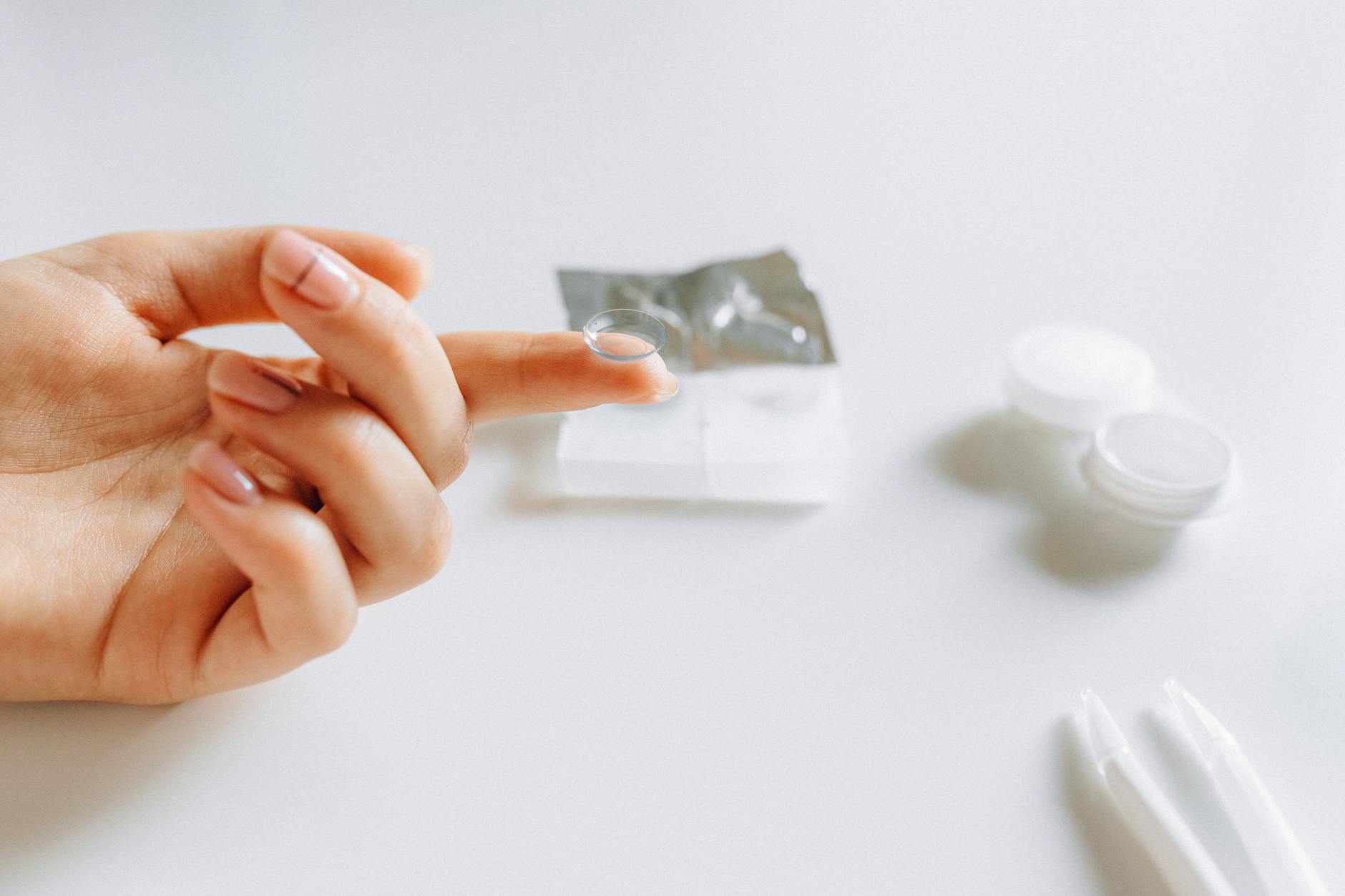
Contact lenses and eye makeup are not fundamentally incompatible, the majority of contact wearers use eye makeup without problems for years. The risks are real but specific: they come from contamination, incorrect product choice, and poor habits around application and removal. Address those three things and the risk reduces to very low.
The Fundamental Risk
Contact lenses sit directly on the cornea, held in place by a thin film of tear fluid. Any particle, chemical residue, or contamination that gets between the lens and the corneal surface can cause:
- Irritation and redness (most common, usually transient)
- Corneal abrasion (from sharp particles like mascara fibres or glitter)
- Infection (from bacterial contamination, more serious and more likely with extended or overnight wear)
The American Optometric Association identifies eye cosmetics as one of the primary external risk factors for contact-related eye infections.
Application Order: Non-Negotiable
Always insert contacts before applying eye makeup.
- Wash hands thoroughly
- Insert contact lenses
- Apply eye makeup
This ensures your hands are clean when handling lenses and that makeup residue on fingers doesn’t transfer to the lens surface during insertion. It also means you can see clearly to apply makeup accurately.
Removing contacts ultimately: Remove lenses before removing eye makeup. Taking out contacts after makeup removal leaves residual product on your fingertips, which contacts pick up during removal.
Products That Carry Higher Risk
Eyeliner on the Inner Waterline
Applying liner to the inner waterline (the mucous membrane inside the lash line) creates direct contact between the product and the thin film maintaining your contact lens. The AAO recommends that contact wearers avoid waterline liner entirely, or limit it to the outer half of the lower lash line where direct lens contact is less likely.
If you regularly tightline:
- Use a fresh brush or applicator each time
- Choose single-use applicators when possible
- Remove contacts before removing this liner
Fibre Mascaras
Mascaras that contain synthetic fibres for length are a specific concern for contact wearers. The fibres can shed throughout the day and deposit onto the lens surface, causing persistent foreign-body sensation and potential corneal scratching. Standard fibre mascaras are not recommended for daily contact wear.
Glitter and Loose Pigment
Loose glitter, pressed pigment, and heavily sparkled shadows shed particles throughout application and wear. These particles can migrate to the eye surface and become trapped under the lens. If you use these products, apply them to the outer corner only, tap off excess before blending, and perform a final fallout check before lens insertion.
Expired or Shared Products
Mascara wands in particular are a vector for bacterial transfer directly to the eye. The mascara tube is a warm, dark, moist environment, ideal conditions for bacterial growth. Replace mascara every 3 months, liquid liner every 6 months, and never share any eye product.
Products That Work Well for Contact Wearers
Tubing mascaras are the best-practice choice. Brands like Thrive Causemetics Liquid Lash Extensions and Blinc Mascara form polymer tubes around lashes that don’t flake or shed during wear. They remove cleanly with warm water without requiring oil-based removers near the eye.
Cream or gel eyeshadow tends to shed less fallout than loose powder, reducing the amount of product that migrates toward the lens. Prestige brands with good adhesion (Urban Decay, Too Faced) work well; avoid very dry, powdery drugstore formulas that kick up visibly during blending.
Water-resistant (not waterproof) liner offers some staying power without requiring the aggressive oil-based removal that can leave residue on a freshly inserted contact.
Daily Habits That Significantly Reduce Risk
- Wash hands before any contact or makeup handling, the single most effective prevention
- Replace makeup at the recommended intervals, mascara every 3 months regardless of how much remains
- Never sleep with contacts in while wearing eye makeup, even if lenses are “extended wear,” makeup residue on the lens during overnight wear significantly increases infection risk
- Have a pair of glasses available, if eyes become irritated during the day, remove lenses and switch to glasses rather than pushing through
- Don’t add water or saliva to dried mascara to extend its life, this introduces bacteria directly into the tube
Clean Contact Lens Case
Rinse your case with fresh contact solution (not tap water) after each use, air-dry face-down on a clean tissue, and replace the case every 1–3 months. Biofilm builds up in cases and is a major source of lens-related infection independent of makeup habits.
When to See an Optometrist
See your eye care provider if:
- Redness persists for more than a few hours after removing lenses
- You experience unexplained sensitivity to light
- Vision changes notably while wearing lenses
- Eyes feel persistently gritty or irritated despite removing makeup and lenses
These can signal early infection, which responds well to treatment when caught early but can be serious if ignored.
Choosing the Right Product for Your Needs
When exploring eye makeup, selecting the perfect product relies heavily on understanding your skin type, undertones, and daily routine. To achieve the most flattering look, always prioritize formulas that work with your unique biology rather than against it.
Understanding Skin Types and Formulas
If you have oily eyelids, powder eyeshadows and waterproof liquid liners will be your best defense against midday creasing and smudging. For those with mature or dry skin, cream shadows and hydrating concealers offer a youthful, radiant finish that won’t settle into fine lines. Always start with a high-quality eye primer to ensure whatever formula you choose locks in place for 12+ hours. Also, applying setting powder lightly over the lids before packing on color can absorb excess sebum throughout the day, significantly extending the life of your look.
The Role of Undertones
Matching your makeup to your undertone is crucial. If you have cool undertones (veins appear blue/purple), reach for icy silvers, cool taupes, and berry hues. If your undertones are warm (veins appear green), gold, peach, bronze, and warm terracotta shades will make your eyes pop. Neutral undertones have the flexibility to wear almost any shade on the color wheel. Remember that contrasting colors on the color wheel create the most dramatic impact; for example, warm copper tones will make blue eyes appear vividly bright, while violet hues beautifully enhance green eyes or hazel eyes.
Proper Removal and Eye Health
The most important step of any makeup routine is removing it. Sleeping in eye makeup can lead to clogged hair follicles, lash loss, and severe eye infections like styes. Use a dedicated, gentle bi-phase makeup remover on a cotton pad, holding it over the closed eye for 10 seconds to dissolve waterproof bonds before gently wiping away. Never violently scrub the delicate skin around the eyes, as this accelerates premature aging and wrinkle formation. After removal, applying a hydrating, peptide-rich eye cream will restore the moisture barrier stripped away by cleansing surfactants, promoting healthy lash growth and a smoother canvas for the next day’s application.
Sources
- American Optometric Association. (2025). “Contact Lens Care and Eye Cosmetics.” aoa.org.
- American Academy of Ophthalmology. (2025). “Eye Makeup Safety.” aao.org.
- Dart, J.K.G. et al. (2023). “Risk Factors for Microbial Keratitis in Contact Lens Wearers.” The Lancet, 401(10), 44–52.
Related Guides
Get weekly eye care & beauty tips
Guides from the Eyeshadow Looks Beauty Desk. No spam, ever.
Frequently Asked Questions
Should you put contacts in before or after applying eye makeup?
Insert contacts before applying eye makeup. This keeps makeup residue off your fingers when you're handling the lens, and helps you see clearly enough to apply makeup accurately. The exception is spray-type setting products, always close your eyes or remove lenses before applying anything in a mist format near the face.
What mascara is safest for contact lens wearers?
Tubing mascaras are the safest choice for contact wearers. They form polymer tubes around each lash instead of flaking traditional mascara, meaning less debris migrates onto the lens surface. Waterproof mascaras are second-best for staying power (less fallout), but require oil-based removal. Avoid fibre mascaras, which shed micro-fibres that can irritate eyes under lenses.
Can eye makeup cause contact lens infections?
Makeup itself rarely causes infections directly, contamination does. Sharing eye makeup, using products past their expiration (mascara: 3 months, liquid liner: 6 months), applying makeup with dirty hands, and sleeping with makeup on while wearing lenses are the main risk factors. The thin film of moisture under a contact lens creates a warm environment where bacteria can multiply rapidly.